How is customs clearance done in Saudi Arabia in 2025?
Customs clearance in Saudi Arabia is one of the most important steps any importer or trader goes through before goods enter the local market. With the expansion of trade and the development of electronic government platforms such as Fasah and the Zakat, Tax and Customs Authority platform, clearance procedures have become faster and more organized. However, this also requires a thorough understanding of the steps, documents, fees, and the updated regulations of 2025.
In this article from Abdullah Shaheen Customs Clearance in Saudi Arabia, you will learn a complete, clear, and accurate explanation of everything you need to understand how to successfully complete the customs clearance process, along with important tips to avoid delays and fines, in addition to distributing targeted keywords that help improve the article’s visibility in search engines.
Firstly: What is customs clearance?
The concept of customs clearance refers to the steps and procedures by which goods entering or leaving the Kingdom of Saudi Arabia are released. The process includes:
- Submit the required official documents
- Payment of customs duties and taxes
- Checking the goods and ensuring they conform to specifications
- Issuing a shipment release authorization
- Delivery of goods to the importer
These steps are carried out through electronic platforms such as Fasah or through accredited customs brokers’ offices in Saudi Arabia.
Second: Customs clearance steps in Saudi Arabia 2025 in detail
Customs clearance in Saudi Arabia is subject to rigorous procedures. A detailed, step-by-step explanation follows:
1. Preparing the essential documents
Before the shipment arrives, the following documents must be prepared:
- Commercial invoice (includes details of goods and value)
- Bill of lading (sea, air, land)
- Certificate of origin
- Packing List
- commercial register
- Authorization for a customs broker
- Any licenses specific to goods (such as food and medicine – standards and specifications – communications…)
2. Register the shipment on the “Fasah” platform
The Fasah platform is the main electronic portal for registering shipments and tracking clearance procedures.
Steps:
- Log in to the Fasah platform.
- Upload the shipment documents.
- Fill in the goods data accurately (classification – weight – value).
- Send the request to the Customs Authority for review.
The importance of data accuracy
Any error in the trade value or HS Code number may result in:
- fines
- Delay in the arrival of goods
- Reopening from the beginning
3. Goods Classification (HS CODE)
Classifying goods is a crucial step in determining applicable duties and taxes.
Common mistakes:
- Selecting an incorrect customs code
- Entering a non-matching description
- Ignore the technical requirements specific to the product.
How do you get the correct rating?
- via Saudi Customs websites
- Through an authorized customs broker
- Through companies specializing in customs clearance
4. Customs clearance and shipment inspection
After the data is submitted, customs takes the following steps:
- Document inspection
- Matching the contents of the shipment
- Security check
- Check product specifications
- Customs duties determination
In some cases, additional documents are required, such as:
- Certificates of Conformity
- Laboratory reports
- Updated reports
5. Payment of customs duties and value-added tax
Customs duties are determined based on:
- Type of goods
- Invoice value
- country of origin
- Specific ratios for 2025
Value Added Tax (VAT)
It is calculated at 15% of the value of the goods + customs duties.
Payment methods:
- Electronic payment
- bank transfer
- Payment via customs broker
6. Issuance of a release permit
After inspection and payment, a customs clearance permit is issued, which allows the importer to receive his goods from the port or point of entry.
Reasons for the delay in issuing the permit:
- unclear invoice details
- Lack of documents
- Differences in quantities or types
- Suspicion about the origin of the goods
7. Receiving goods from the port or airport
This is done via:
- Submitting a release permit
- Submitting the release permit and paying the port storage fees.
- Transporting goods to warehouses
Third: The most important official bodies that you deal with during customs clearance
1. Zakat, Tax and Customs Authority
The main body responsible for regulating the import and export process.
2. Food and Drug Authority
If the goods are food, pharmaceutical, or cosmetic.
3. Communications Authority
For electronic devices and communication chips.
4. Saudi Standards, Metrology and Quality Organization (SASO)
For certificates of conformity and electrical products.
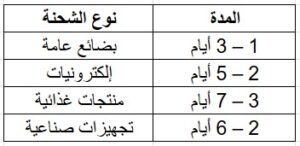
Fourth: Expected time for customs clearance in Saudi Arabia 2025
The duration varies depending on the type of goods and the port, but in general:
Fifth: Golden tips to speed up the customs clearance process
- Upload the documents before the shipment arrives.
- Entering 100% correct data.
- HS CODE confirmation before shipping.
- Dealing with a certified and experienced customs broker.
- Track the order status daily via Fasah.
- Prepare invoices clearly (quantity – price – country of origin).
- Avoid prohibited or restricted products unless you have obtained official authorization.
Sixth: Common mistakes that delay customs clearance
- Invoice data conflicts with the shipping policy.
- Entering an incorrect customs code
- Failure to obtain a certificate of conformity
- Incorrect business valuation
- Shipping goods that require a permit without the importer’s knowledge
- Leaving the shipment at the port for an extended period results in high storage fees.
Seventh: Customs clearance costs and fees 2025
The cost varies depending on:
- Type of goods
- country of origin
- Are there any special fees?
- Do you need further testing?
Estimated examples:
- Electronic devices: 5-20%
- Clothing and fabrics: 5-12%
- Auto parts: 5-15%
- Perfumes and cosmetics: 12-20%
- Foodstuffs: 0-15%
Eighth: Why do you need a professional customs broker?
Because the procedures have become electronic and complex, having a customs broker like Abdullah Shaheen for customs clearance will guarantee you:
- Clearance speed
- Reducing fines
- Enter accurate data
- Saving time and costs
- Save time and complete all procedures without needing to be physically present at the port.
Ninth: Frequently Asked Questions about Customs Clearance in Saudi Arabia 2025
1. Can I clear my goods myself?
This is possible, but the procedure requires considerable expertise. It’s preferable to rely on a professional.
2. Does customs clearance at the airport differ from that at the port?
The procedures are similar, but the clearance time varies depending on the type of shipment.
3. Can clearance be expedited in urgent cases?
Yes, by submitting complete documents and using the fast track service.
4. What should I do if my permit application is rejected?
Documents are amended, errors are corrected, and the order is resubmitted.
5. How long does it take to obtain a permit?
Typically between 6 hours and 48 hours.
Tenth: Article Summary
Customs clearance in Saudi Arabia became faster and easier in 2025, but it still depends on accurate data, complete documentation, and proper execution through the Fasah platform. If you follow the steps outlined in this guide, you will be able to clear your shipment in less time and without any delays or penalties.
If you need professional assistance, Abdullah Shaheen Customs Clearance provides all import and clearance services with high accuracy and speed in all Saudi ports.